
Paws Forward Dog Training and Boarding
  • Home
  • Dog Training Services
    • Board and Train
    • Puppy Camp
    • Private Lessons
  • Boarding
    • Boarding Booking Form
  • Service Dogs
    • Available Trained Dogs
  • Contact
    • schedule a phone consult
    • About the Trainer
    • Testimonials
  • Blog
  • Shop

Is the solar eclipse dangerous for dog's?

4/4/2024

0 Comments

 
Picture
The Solar Eclipse will happen on April 8th 2024. According to NASA the eclipse will start in South Western Ontario at 2:04pm and end at 4:32pm with the most intensity around 3:20pm.

You might wonder if this should have any effect on your dog? Should you be keeping them indoors? could it cause them stress? is it even harmful for them?

Scientists have warned us not to look directly at the sun during the eclipse, and if you plan too there are special glasses that we are suppose to wear to protect our eyes. According to the Ontario Association of Optometrists, looking directly at the sun during an eclipse can cause burns, blurred vision or even permanent loss of vision.

Your dog sees the world a little bit differently then you do. Dogs seldom look up towards the sky unless something flying overhead catches their eye. Have you even seen your dog look up to watch a bird fly overhead? They don't look up for long and certainly would not know to look at an eclipse (even when the sky darkens).

The only study on the effect of an eclipse on dogs was in 1932 by the American Academy of Arts and Sciences. It suggested that some of the dogs did appear to become stressed as if there was an approaching thunderstorm but they could not determine if it was stress from the eclipse or just stress from being involved in the test.

If you are worried that your dog may become stressed during the eclipse you should keep them inside. You could even crate your dog for a few hours during peak activity, giving them something long lasting to chew could also help distract them. A kong stuffed with yogourt or pureed pumpkin and then frozen over the night before would be an excellent choice. You could also try to distract your dog with some fun games or training in a quiet room. You should talk with your veterinarian if you feel your dog might have a strong reaction.

Enjoy and stay safe!


0 Comments
how to curb my dogs jumping

3/30/2024

0 Comments

 
Picture
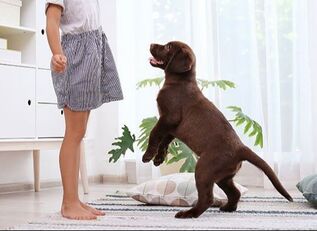
Teaching a dog not to jump up on people involves consistent training, redirection, and positive encouragement. Here's a step-by-step guide on how to stop a dog from jumping up:
  1. Don't just ignore the jumping: I watch so many videos on social media where people advocate just turning around when a dog jumps on you. This may be a good tactic for a very young puppy but it wont discourage a serial jumper. Dogs learn to jump by getting something out of it and you have to figure out what that is and remove it. My favourite tactic for dealing with a serial jumper is to keep them on a light leash in the house and step on it if they try to jump. Step on it so it prevents them from jumping up and getting that reward, its also great to have handy if someone stops by. This way you have control over your dogs jumping and can prevent it before it becomes habitual.

  2. Redirect Attention: As soon as your dog's paws touch the ground, immediately praise and reward them with treats or verbal praise. Redirect their attention to an alternative behavior, such as sitting.

  3. Use a Command: Teach your dog a specific command, such as "sit" and use it consistently when greeting them or when they start to jump up. Reward them for complying with the command and remaining calm. So instead of your dog greeting someone by jumping they sit instead.

  4. Practice Consistency: Enlist the help of family members and visitors to ensure everyone responds to jumping behavior in the same way. Consistency is key to reinforcing the desired behavior and avoiding confusion. Remember dogs are habitual creatures and every behavior they practice repeatedly will become a habit.

  5. Train Alternative Greetings: Teach your dog an alternative greeting behavior, such as sitting politely, instead of jumping up. Practice these behaviors during greetings and reward them for their calm and polite behavior.

  6. Provide Mental and Physical Exercise: Ensure your dog gets enough mental and physical exercise to help reduce their excitement and energy levels. A tired dog is less likely to engage in unwanted behaviors like jumping up.
  7. Use Leash and Harness: If your dog tends to jump up when meeting new people or in certain situations, use a light leash to maintain control and prevent them from jumping. Reinforce calm behavior with treats and praise.

  8. Avoid Reinforcing Jumping: Be mindful not to inadvertently reinforce jumping behavior by giving attention, even if it's to reprimand the dog. Any form of attention can reinforce the behavior, so it's essential to only reward calm and polite behavior.
  9. Be Patient and Consistent: Changing behavior takes time, so be patient and consistent with your training efforts. Avoid getting frustrated and remain calm and assertive when correcting jumping behavior.
  10. Seek Professional Help if Needed: If your dog's jumping behavior persists despite consistent training efforts, consider seeking guidance from a certified dog trainer or behaviorist who can provide personalized advice and assistance.
By following these steps and being patient and consistent with your training, you can effectively teach your dog to greet people politely without jumping up. Remember that positive reinforcement and redirection are key components of successful training

0 Comments

how to prevent separation anxiety

3/30/2024

0 Comments

 
sad puppy with separation anxiety
Preventing separation anxiety in dogs involves gradual training, establishing routines, and providing environmental enrichment to help your dog feel more secure when left alone. Here are some tips to prevent separation anxiety in dogs:

  1. Gradual Departures: Practice leaving your dog alone for short periods initially, then gradually increase the time as they become more comfortable. Start with just a few minutes and gradually extend the duration over several weeks. The easiest way to do this is to crate train and start it right away when you bring your new puppy or older dog home.

  2. Desensitization: Associate your departure cues (e.g., putting on shoes or picking up keys) with positive experiences, such as giving treats or engaging in a favourite activity. This helps to minimize anxiety triggered by these cues.

  3. Establish a Routine: Stick to a consistent daily routine for feeding, exercise, and departure times. Predictability can help reduce anxiety by providing a sense of structure and security for your dog. Dogs are extremely habitual creatures so its very important to set up good routines and structure so your dog knows what to expect.

  4. Provide Mental Stimulation: Keep your dog mentally stimulated with interactive toys, puzzle feeders, and enrichment activities. Mental exercise can help alleviate boredom and anxiety. There are lots of great ideas on social media but some of my favourites are; taking some kibble and throwing it outside in the grass and letting your dog search for it. you can also add nutritious food to a kong (like yogourt, mashed sweet potato or even soak kibble in water until its soft, mash and stuff) freeze the kong and take it out when you are busy. Your dog will love it! 

  5. Physical Exercise: Ensure your dog gets enough physical exercise through regular walks, play sessions, or other forms of physical activity. A tired dog is less likely to become anxious when left alone.

  6. Create a Safe Space: Designate a comfortable and secure area for your dog when you're away, such as a crate or a specific room. Make the space inviting with blankets, toys, and familiar scents.

  7. Practice Alone Time: Encourage independence by gradually increasing the time your dog spends alone, even when you're at home. Use gates or baby gates to create separation while you're in different rooms.

  8. Seek Professional Help: If your dog exhibits severe separation anxiety despite your efforts, consult with an experienced trainer for personalized guidance and treatment options.

  9. Consider Doggy Daycare or Dog Walker: If possible, arrange for a doggy daycare or hire a dog walker to provide companionship and break up long periods of solitude during the day.
By implementing these strategies and being patient and consistent, you can help prevent separation anxiety in your dog and foster a sense of security and confidence when left alone.


0 Comments

    Author

    Sarah McMurdo

    Archives

    April 2024
    March 2024

    Categories

    All
    Dog Breeds
    Dog Training
    Leash Reactivity
    Leash Training
    Nutrition
    Potty Training
    Prevention
    Puppy Training
    Resource Guarding
    Separation Anxiety
    Service Dogs

    RSS Feed

Location: 2633 Cameron Rd Alvinston Ontario

What Our Clients Are Saying

"Complete success, Holly loved her stay at your Board and Train Program and I am so pleased that you were able to achieve all of our training objectives for her.   I especially appreciated your kind and dedicated approach to Holly’s training, and I know I will be able to maintain it long-term.  It is great to have a happy and well behaved dog, I only wish I had sent her to your program sooner.   Thank you," ~   MK
Picture
Picture
Picture
Picture
  • Home
  • Dog Training Services
    • Board and Train
    • Puppy Camp
    • Private Lessons
  • Boarding
    • Boarding Booking Form
  • Service Dogs
    • Available Trained Dogs
  • Contact
    • schedule a phone consult
    • About the Trainer
    • Testimonials
  • Blog
  • Shop